
What Is Cellulite? Causes of Dimpled (Orange-Peel) Skin and Effective Treatments
16/01/2026
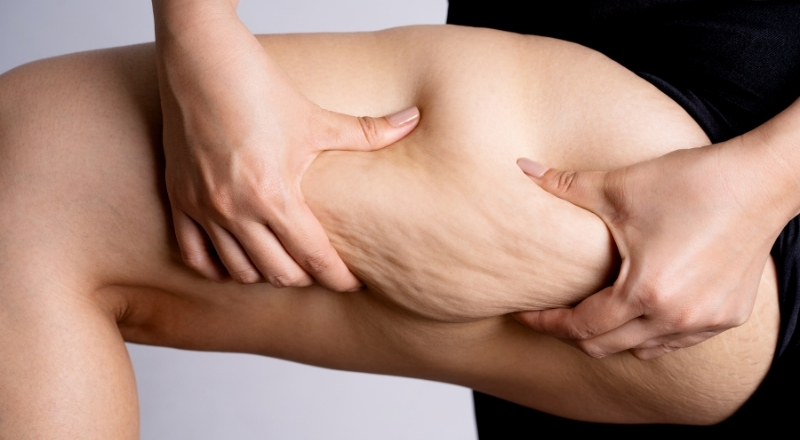
Cellulite is a condition characterized by dimpled, orange-peel-like skin that commonly occurs in women, especially around the thighs, buttocks, and lower abdomen. Although it is not a medical condition, cellulite significantly affects appearance and self-confidence.
Many people confuse cellulite with excess fat or sagging skin, which leads to choosing ineffective treatment methods. In reality, cellulite is closely related to the structure of connective tissue, collagen, and subcutaneous fat.
The article below from Nguyen Ba Chemical will help you gain a clear understanding of what cellulite is, its formation mechanism at the biological and chemical levels, and the scientific solutions applied in modern cosmetic formulations.
What is Cellulite? Distinguishing it from excess fat and other skin concerns
Definition of Cellulite
Cellulite is a condition in which the skin surface develops uneven dimples and bumps resembling an orange peel. It commonly appears on the thighs, buttocks, lower abdomen, and upper arms. In Vietnamese, this condition is often referred to as "orange-peel skin" or "dimpled skin".
From a biological perspective, cellulite is not simply excess fat. It results from a complex interaction between subcutaneous fat, connective tissue (collagen), and microcirculation. When fibrous connective tissue bands (fibrous septae) pull the skin downward while fat lobules push upward, the skin surface becomes uneven, creating the characteristic “orange-peel” appearance.
An important point to understand:cellulite is a structural skin condition, not a disease, and it does not directly reflect obesity or body weight.
How to Cellulite different from excess fat and sagging skin?
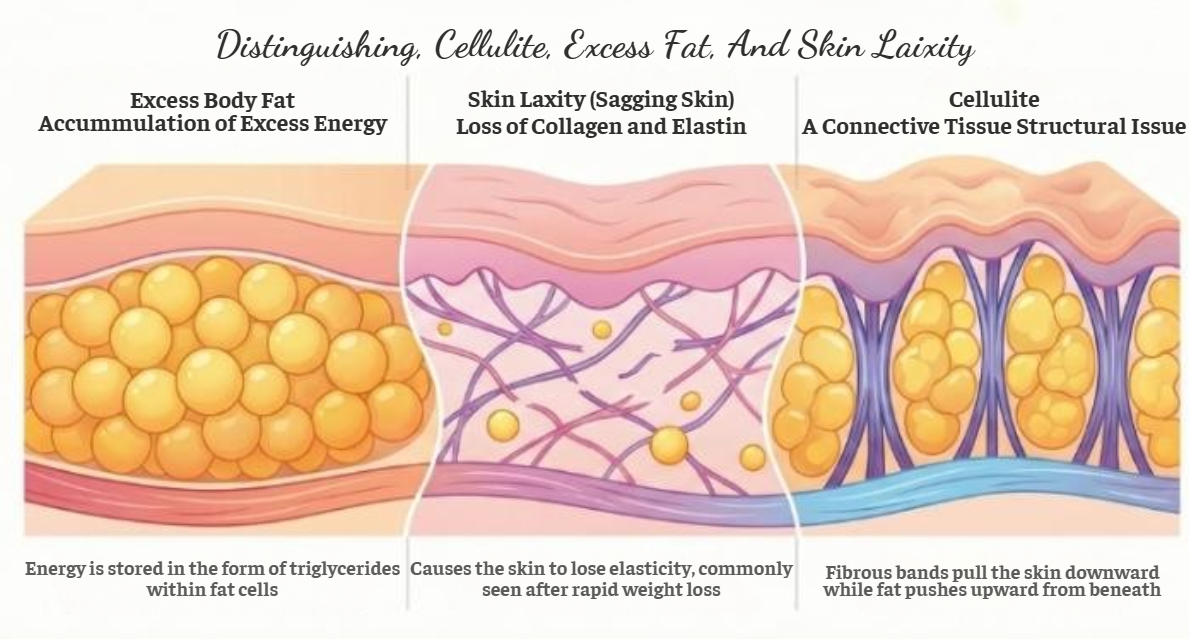
Many people confuse cellulite with excess fat or sagging skin, but biologically, these are three distinct conditions:
- Excess fat: This is the accumulation of surplus energy stored as triglycerides in fat cells. Excess fat can be significantly reduced through dieting and regular exercise.
- Skin laxity: This occurs when collagen and elastin decline, causing the skin to lose elasticity. It is commonly seen in older individuals or after rapid weight loss.
- Cellulite: This is a connective tissue structural issue in which fibrous septae pull the skin downward unevenly while fat pushes upward from beneath.
Even after successful weight loss, cellulite may still remain because its cause lies not only in the amount of fat, but also in the quality of collagen, elastin, and the structure of fibrous tissue within the skin.
Prevalence and common affected groups
Cellulite is extremely common, especially among women. Studies show that 80-98% of women after puberty have cellulite to varying degrees. The main reasons include:
- Female hormones (estrogen): Influence fat distribution and the structure of connective tissue.
- Collagen structure in women: Tends to be arranged in parallel patterns, making the skin more prone to uneven, dimpled areas.
- Aging: Collagen and elastin gradually decline over time.
Men are less likely to develop cellulite due to their cross-hatched connective tissue structure and lower estrogen levels.
Causes and mechanisms of Cellulite formation
Skin structure and connective tissue
Human skin consists of three main layers: the epidermis, dermis, and subcutaneous tissue. Cellulite forms primarily in the subcutaneous layer, where fat cells and fibrous connective tissue bands (fibrous septae) are concentrated.
When fat cells enlarge, they push upward toward the skin surface. Meanwhile, the fibrous septae pull the skin downward, creating an uneven, dimpled appearance. In areas where collagen is weak or damaged, this imbalance becomes even more pronounced.
This explains why methods that focus solely on fat reduction often fail to completely eliminate cellulite.
Hormones and genetic factors
Hormones play a key role in the development of cellulite:
- Estrogen increases subcutaneous fat accumulation, reduces microcirculation, and affects collagen synthesis.
- Thyroid hormones influence metabolism and the quality of connective tissue.
- Genetic factors determine skin thickness, collagen structure, and the tendency to store fat.
If a mother or sisters have noticeable cellulite, the likelihood of developing it is significantly higher.
Lifestyle and environmental factors
Lifestyle and environmental factors are not direct causes of cellulite, but they can make the orange-peel appearance more visible by affecting circulation, tissue inflammation, and collagen quality.
- High-sugar and processed diets: Excess sugar raises insulin levels, promotes fat storage, and triggers low-grade inflammation, accelerating collagen degradation and reducing skin smoothness.
- High salt intake and water retention: Salty foods cause fluid retention in tissues, making cellulite appear more uneven and prominent, even without an actual increase in fat.
- Sedentary lifestyle: Lack of physical activity reduces blood and lymphatic circulation, depriving connective tissue of oxygen and nutrients, leading to reduced firmness and elasticity.
- Smoking: Free radicals in cigarette smoke cause oxidative stress, reducing collagen and elastin synthesis and making the skin structure more vulnerable to deformation by underlying fat.
- Dehydration and lack of sleep: Insufficient water intake and poor sleep reduce skin turgor and repair capacity, making cellulite more noticeable.
In summary, maintaining a healthy lifestyle is a fundamental condition that helps skincare solutions, cosmetic products, and cellulite-reduction technologies achieve more effective and long-lasting results.

Chemical mechanisms - Effects on collagen and elastin
At the microscopic level, cellulite is associated with:
- Activity of collagen-degrading enzymes (such as collagenase and MMPs).
- Oxidative stress, which damages collagen and elastin fibers.
- Chronic low-grade inflammation in adipose tissue.
In cosmetics and skincare, many active ingredients are designed to inhibit collagen-degrading enzymes, provide antioxidant protection, and stimulate new collagen synthesis, thereby helping to improve the appearance of cellulite.
Levels of Cellulite and signs of recognition
Classification by severity (Grades I-III)
- Grade I (mild): Skin appears smooth when standing: dimpling is only visible when pinching the skin or sitting.
- Grade II (moderate): Slight dimpling is visible when standing and becomes more noticeable when the skin is squeezed.
- Grade III (severe): Pronounced dimpling is visible even when standing, often accompanied by thicker skin and reduced elasticity.
Correctly identifying the grade helps in choosing the appropriate approach to treating orange-peel skin and avoiding unrealistic expectations.
Common affected areas
Cellulite typically appears in areas prone to fat accumulation, including:
- Thighs and buttocks.
- Lower abdomen.
- Back of the upper arms.
These areas generally have poorer circulation and are more strongly influenced by hormones.
Early signs of Cellulite
In the early stages, cellulite is often difficult to detect with the naked eye, especially when standing normally. However, several early signs can help identify the condition before it becomes more obvious:
- Reduced skin smoothness: The skin feels slightly uneven or grainy to the touch, especially on the thighs and buttocks.
- Mild dimpling when pinched: Small indentations begin to appear on the skin surface under mechanical pressure.
- Changes in skin texture under angled light: Areas with early cellulite may look less even-toned and less smooth when viewed from the side.
- Slight loss of elasticity: The skin takes longer to bounce back after being pressed, indicating early weakening of collagen and elastin.
Early detection of cellulite allows lifestyle adjustments, exercise, and skincare interventions to be more effective, helping to prevent progression to more severe stages.

Solutions for reducing Cellulite - From lifestyle to cosmetic products
Diet and daily habits
Diet does not directly eliminate cellulite, but it plays an important role in controlling the severity of orange-peel skin. When nutrition is unbalanced, fat accumulation and collagen breakdown accelerate, making cellulite more visible. A diet that supports cellulite reduction should focus on:
- Foods rich in collagen and vitamin C (such as fish, bone broth, and citrus fruits)
- Omega-3 fatty acids to help reduce inflammation
- Reducing refined sugar and processed foods
- Maintaining regular physical activity to improve circulation
In addition to nutrition, maintaining healthy daily habits—getting enough sleep and limiting smoking—helps slow collagen degradation, thereby supporting long-term improvement in cellulite appearance.
Exercise and massage
Exercise does not directly alter the structure of fibrous septae, but it plays a crucial role in improving the underlying skin foundation in areas affected by cellulite. As muscle mass increases and blood circulation improves, the skin surface often appears smoother and firmer.
Forms of physical activity that provide noticeable benefits include:
- Strength training for the thighs and glutes, which helps reduce contrast between dimpled and raised areas of the skin.
- Moderate-intensity cardio, which improves blood flow and lymphatic drainage.
- Regular massage, whether performed manually or with devices, helps support circulation and temporarily reduce fluid retention.
However, it is important to understand that massage does not change the structure of connective tissue. Therefore, its effects are supportive and should be combined with other methods for optimal results.

Advanced skincare products
Topical skincare products cannot completely “erase” cellulite, but they can significantly improve the skin’s surface when used correctly:
- Caffeine: Stimulates circulation and supports temporary fat breakdown.
- Retinol: Boosts collagen production and improves skin thickness.
- Peptides: Support skin restructuring and repair.
The primary mechanism is enhancing collagen production, improving elasticity, and smoothing the skin, thereby reducing the dimpled appearance.
Aesthetic devices and treatments
When Cellulite reaches moderate to severe levels, conventional skincare methods often deliver limited results. In such cases, aesthetic technologies can target the underlying structures responsible for orange-peel skin more effectively:
- RF (radiofrequency): Heats subcutaneous tissue, stimulates collagen production, helping to firm the skin and smooth the surface.
- Laser: Penetrates deeply into connective tissue, helping to break down fibrous septae and restructure collagen.
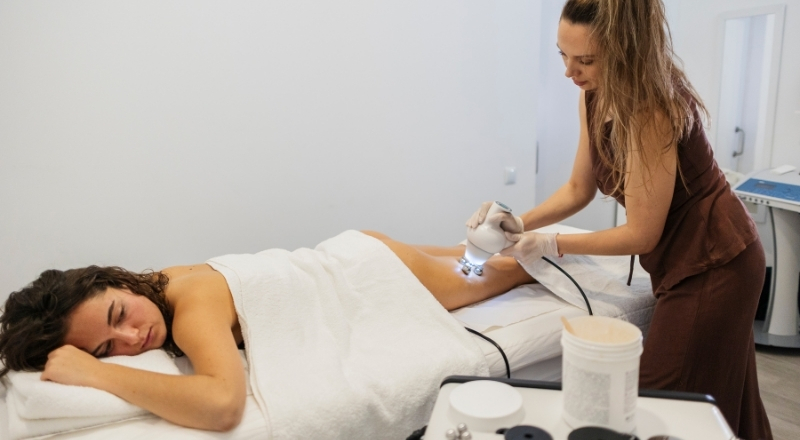
- Acoustic wave therapy: Improves circulation and lymphatic drainage, suitable for mild to moderate cellulite.
- Subcision: Directly cuts the fibrous bands pulling the skin downward, delivering noticeable results for severe cellulite but involving an invasive procedure.
Overall, these methods deliver faster and more noticeable results than cosmetic products, but they are costly and require ongoing maintenance. Optimal results are usually achieved by combining aesthetic technologies with a healthy lifestyle and appropriate skincare.
Combining treatment approaches for optimal results
No single method can completely eliminate cellulite. The most effective approach is to:
- Adjust lifestyle habits.
- Combine with targeted skincare products.
- Use aesthetic interventions for severe cellulite.
Treatment plans should be personalized based on the severity of cellulite and realistic goals.
Frequently asked questions about Cellulite
Can cellulite disappear completely?
→ It is very difficult to eliminate cellulite completely, but it can be significantly improved with the right combination of methods.
Who is most prone to cellulite?
→ Women after puberty, people with a sedentary lifestyle, and those with genetic predisposition.
Should fat-loss drugs or dietary supplements be used?
→ There is no strong evidence supporting long-term effectiveness for cellulite.
Which cosmetic products are truly effective?
→ Products containing retinol, caffeine and peptides have evidence supporting improvement in skin texture.
Can cellulite return?
→ Yes, if healthy lifestyle habits and proper skincare are not maintained.
Are natural methods effective?
→ They may be effective at a mild level, but require consistency and a combination of multiple factors.
Conclusion
Cellulite is a structural issue involving the skin and connective tissue, not simply excess fat. Understanding its formation mechanisms helps in choosing the right solutions and avoiding unrealistic expectations. The most effective approach is a combination of a healthy lifestyle, scientifically formulated skincare, and appropriate aesthetic technologies, leading to more sustainable improvement of Cellulite.
To explore more in-depth knowledge about cosmetic ingredients and skincare solutions, you can visit the Nguyen Ba Chemical website for additional valuable resources.


