
Licorice Extract - Amazing Benefits in Skin and Hair Care
28/10/2025
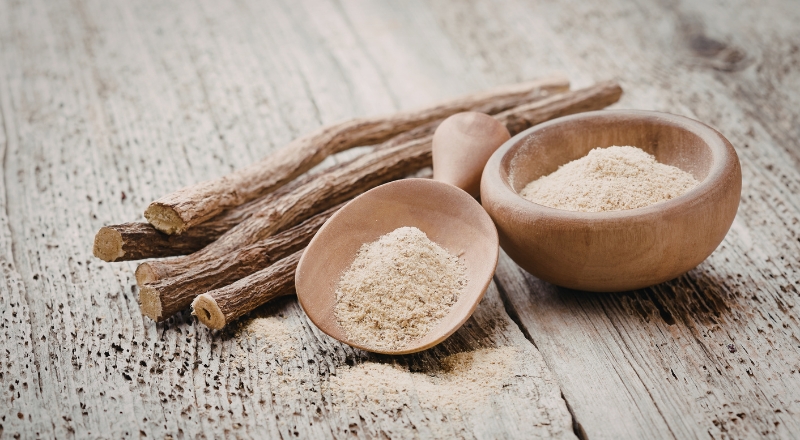
For a long time, licorice has been regarded as a precious medicinal herb in traditional medicine, and today it has become an indispensable ingredient in natural cosmetic products. Let’s take a deeper look at licorice extract to discover why it is hailed as a “golden ingredient” in modern skin and hair care.
WHAT IS LICORICE EXTRACT?
Licorice (scientific name: Glycyrrhiza glabra) is a plant belonging to the legume family and has been used in traditional medicine for thousands of years. From the roots and stems of the plant, valuable bioactive compounds are extracted, known as licorice extract (Licorice Root Extract).
Today, licorice extract is not only used in pharmaceuticals but is also considered a “golden” ingredient in cosmetics and hair care products, thanks to its soothing, anti-inflammatory, and naturally safe skin-brightening properties.
This extract ranges in color from light yellow to light brown, has a mild natural aroma, dissolves well in water, and is well suited for formulation in skincare products, shampoos, and hair serums.

CHEMICAL COMPOSITION AND MECHANISM OF ACTION
Licorice Extract contains more than 300 different compounds, among which the most notable include:
- Glycyrrhizin (Glycyrrhizic Acid): Possesses anti-inflammatory and antibacterial properties, helps soothe irritation, and supports the recovery of damaged skin.
- Glabridin: A flavonoid that inhibits the enzyme tyrosinase, thereby reducing melanin production and helping to brighten and even out skin tone.
- Liquiritin: Helps disperse and remove existing melanin pigments, improving dark spots and hyperpigmentation.
- Flavonoids & Polyphenols: Slow down the skin aging process, provide strong antioxidant effects, and protect skin cells from damage caused by UV radiation and environmental pollution.
MAIN MECHANISMS OF ACTION OF LICORICE EXTRACT
- Inhibits the formation of melanin pigment, helping to brighten and even out skin tone.
- Provides anti-inflammatory and antibacterial effects while reducing irritation - especially beneficial for sensitive skin or inflammation - prone scalps.
- Neutralizes free radicals, helping protect the skin and hair from environmental damage.
- Enhances blood circulation, supporting better nourishment of skin cells and healthier hair follicles.

USES OF LICORICE EXTRACT
FOR SKIN
- Natural skin brightening: Glabridin and Liquiritin help inhibit melanin production, resulting in brighter, smoother, and more even - toned skin.
- Reduction of dark spots and freckles: Helps fade post - acne marks, sun - induced pigmentation, and hyperpigmentation.
- Anti - inflammatory and soothing effects: Reduces skin inflammation, irritation, and redness, especially beneficial for sensitive skin.
- Anti - aging: Rich in antioxidants that neutralize free radicals, prevent cellular damage, and reduce early signs of aging such as wrinkles.
FOR HAIR
- Stimulates hair growth: Helps prolong the hair growth phase, promoting longer, thicker, and healthier hair.

APPLICATIONS OF LICORICE EXTRACT IN COSMETICS AND HAIR CARE
IN BEAUTY AND SKINCARE PRODUCTS
Licorice Extract is considered a “rising star” in the natural cosmetics industry and is commonly found in:
- Brightening serums and moisturizing creams.
- Hydrating and anti - aging face masks.
- Toners or facial cleansers formulated for sensitive skin.
- Products targeting dark spots, hyperpigmentation, and inflammatory acne.
Licorice Extract offers soothing and restorative benefits while safely brightening the skin without causing exfoliation or irritation, making it fundamentally different from synthetic whitening agents.
IN HAIR CARE PRODUCTS
Licorice Extract is a popular ingredient in premium hair care formulations:
- Natural shampoos, hair serums, hair masks, and conditioners: Especially favored by brands developing hair growth - stimulating product lines.
- Notably, when combined with other botanical extracts such as Platycladus orientalis (Chinese arborvitae), Eclipta prostrata, green tea, pomelo, and perilla extract, it forms a powerful natural complex for hair care - enhancing effectiveness multiple times by reducing hair loss, stimulating new hair growth, and providing essential nutrients to nourish the hair.

NOTES WHEN USING LICORICE EXTRACT
Below are some important considerations to help maximize the effectiveness of licorice extract:
- Although it is a natural ingredient, licorice extract should still be used at appropriate concentrations to avoid potential irritation.
- It should not be applied directly to the skin or hair without proper dilution or formulation with a suitable base product.
- Pregnant women and young children should consult a healthcare professional before using products containing this ingredient.
WHERE TO BUY HIGH - QUALITY LICORICE EXTRACT?
Currently, there are many suppliers of licorice extract on the market. However, you should choose suppliers that provide a COA (Certificate of Analysis) to ensure clear origin, purity, and stable active compound concentration.
One reputable supplier is Nguyen Ba Chemical, which specializes in providing high - quality cosmetic raw materials, including Licorice Extract and Akobiol™ HGL Licorice. These Licorice Extract are officially imported and meet safety standards for cosmetic manufacturing and hair care applications.
CONCLUSION
Licorice Extract is not just a conventional beauty ingredient - it is a true “golden key” for skin regeneration and protection. With its powerful anti - inflammatory, soothing, melanin - inhibiting, and antioxidant mechanisms, this extract helps deliver brighter, healthier skin and stronger, thicker hair.
If you are looking for a solution that is both gentle and effective for your skin, prioritize products containing natural Licorice Extract. With consistent use, you will notice smoother, more radiant skin and revitalized, healthier hair - fully reflecting the philosophy that nature nurtures beauty, which licorice so perfectly represents.
REFERENCES
18-β-Glycyrrhetinic Acid Promotes Hair Growth by Stimulating the Proliferation of Dermal Papilla Cells and Outer Root Sheath Cells, and Extends the Anagen Phase by Inhibiting 5α-Reductase,
Kenta Hagiwara, Biological & Pharmaceutical Bulletin, Vol. 47, No. 7, pp. 1392–1395 (2024).


