
What is Astaxanthin? Uses, origin, and applications of Astaxanthin in cosmetics
06/01/2026
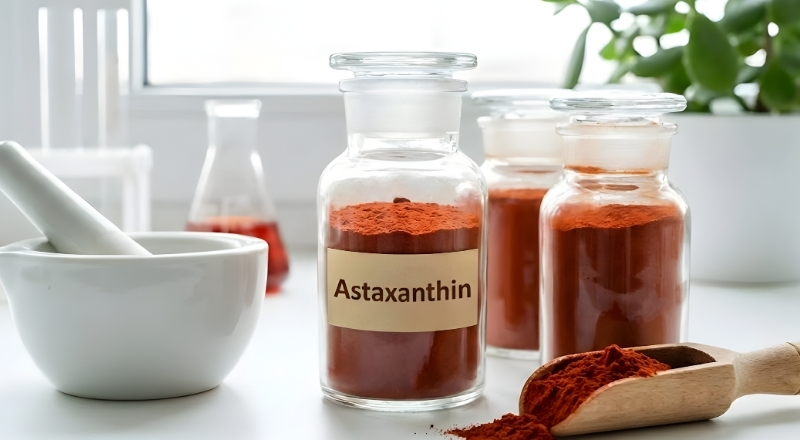
In recent years, Astaxanthin has attracted increasing attention in the cosmetics and high-end skincare ingredient industry due to its exceptional antioxidant properties. This active compound is often referred to as the “king of antioxidants” thanks to its superior ability to protect cells compared to many other commonly used antioxidants. So, what is Astaxanthin, where does it originate from, what benefits does it offer, and how should it be used to ensure safety? The article below by Nguyen Ba Chemical will provide you with a comprehensive understanding of this powerful active ingredient.
What is Astaxanthin?
Definition of Astaxanthin
Astaxanthin is a naturally occurring carotenoid belonging to the xanthophyll group, characterized by its distinctive red-orange color and oil-soluble nature. In cosmetic applications, Astaxanthin is classified as a powerful antioxidant, capable of protecting skin cells from oxidative stress and premature aging.
Unlike many conventional active ingredients, Astaxanthin exhibits high biological stability when properly processed and formulated in suitable cosmetic-grade raw material forms.
Structural Characteristic and Properties
From a chemical structure perspective, Astaxanthin is able to span the entire cell membrane, withone end of the molecule oriented outward and the other directed inward toward the interior of the cell. Thanks to this unique structural configuration, Astaxanthin can neutralize free radicals both inside and outside the cell membrane - an ability that many other antioxidants do not possess.
This distinctive feature is why Astaxanthin is considered more potent than vitamin C, vitamin E, and beta-carotene in protecting cells against oxidative damage. According to a study by Nishida, Y. et al. (2007), Astaxanthin demonstrated a significantly higher singlet oxygen quenching capacity compared to many commonly used hydrophilic and lipophilic antioxidants, as measured using a chemiluminescence - based system.
The study also indicated that, due to its unique molecular structure and lipid - soluble properties, Astaxanthin can function effectively within the cell membrane environment, where lipid oxidation processes are particularly intense. This scientific evidence explains why Astaxanthin is increasingly favored in cosmetic formulations designed for antioxidant protection and defense against environmental stressors.

Source of Astaxanthin
Astaxanthin from Haematococcus pluvialis Microalgae
The most commonly used natural source of Astaxanthin in cosmetic applications is the microalga Haematococcus pluvialis. Under environmental stress conditions, this microalga produces Astaxanthin in high concentrations as a self - protective mechanism.
Astaxanthin extracted from Haematococcus pluvialis offers several advantages:
- High biological activity.
- Suitable for skincare and cosmetic formulations.
- Complies with cosmetic raw material safety standards.
Astaxanthin in Marine Organisms
In addition to microalgae, Astaxanthin is also found in salmon, shrimp, crab, shellfish, and various other marine organisms. This compound is responsible for the natural red - orange coloration of these seafood species and helps protect their cells against the harsh marine environment.
However, the Astaxanthin content in natural food sources is generally low and difficult to reach effective supplementation levels through a normal diet alone.

Astaxanthin extraction process
Natural Astaxanthin is extracted using advanced technologies designed to preserve its biological activity, with supercritical CO₂ extraction being the most commonly applied method. This process allows the production of high-purity Astaxanthin without solvent residues, making it suitable for use in dietary supplements, cosmetic products, and pharmaceutical applications.
Benefits of Astaxanthin in cosmetics
Astaxanthin is highly valued not only for its powerful antioxidant capacity but also for its broad range of biological effects across multiple physiological systems. Its benefits have been extensively studied and applied in the fields of healthcare, beauty, and anti - aging support.
Comprehensive Protection of Skin Cell Membranes
Skin cell membranes contain high levels of phospholipids and unsaturated fatty acids, which are particularly susceptible to oxidative damage. When cell membranes are compromised, their protective and metabolic functions deteriorate, leading to a series of visible skin concerns such as weakened skin barrier function,increased sensitivity, and premature aging.
Astaxanthin possesses a unique molecular structure that allows it to intercalate across the cell membrane, stabilizing the lipid bilayer on both the inner and outer surfaces. As a result, this active ingredient helps maintain the integrity of cell membranes, enabling skin cells to function optimally even under prolonged environmental stress conditions.
Control of Lipid Oxidation - a Root Cause of Skin Aging
Lipid oxidation is one of the primary mechanisms driving skin aging, as it weakens the skin barrier and promotes low - grade inflammatory response. Astaxanthin helps regulate this process by reducing the formation of secondary oxidation products, thereby limiting the spread of oxidative damage between skin cells.
This mechanism supports long - term skin stability rather than delivering only short - term surface - level improvements. For this reason, Astaxanthin is frequently selected for anti - aging formulations aimed at achieving sustained and lasting results.

Indirect Support for the Preservation of Collagen and Elastin Structure
Astaxanthin does not directly stimulate collagen synthesis in the same way as certain skin - restructuring active ingredients; however, it plays a critical role in slowing down the degradation of collagen and elastin.
By limiting oxidative stress and low - grade inflammatory responses, Astaxanthin helps create a more stable skin environment, thereby reducing the activity of enzymes responsible for the breakdown of the skin’s structural support network. This approach is well suited for long - term skincare formulations that prioritize maintaining skin quality over time.
Stabilization of Low - Grade Inflammatory Responses - a Key Factor in Skin Health
Many conditions associated with sensitive, weakened, or prematurely aged skin originate from chronic low-grade inflammation. Although not always visibly apparent, this type of inflammation has long-term effects on overall skin quality.
Astaxanthin helps regulate these responses by stabilizing cells and reducing oxidative signaling that triggers inflammatory pathways. As a result, the skin maintains a more balanced state, becomes less prone to irritation, and shows improved tolerance when combined with other active ingredients in cosmetic formulations.
Applications of Astaxanthin in cosmetic formulations
Astaxanthin is a powerful natural antioxidant widely used in cosmetic raw materials due to its ability to protect skin cells, slow down aging processes, and enhance formulation stability through its excellent compatibility with oils and lipids. The effective use of Astaxanthin requires a clear understanding of its functions, raw material forms, coloration, and methods for preserving its biological activity to ensure product quality
Cosmetic Products Incorporating Astaxanthin
When integrating Astaxanthin into formulations, it is essential to define the product type and performance objectives. Thanks to its strong antioxidant properties and oil-soluble nature, Astaxanthin is suitable for a wide range of skincare products:
- Anti - aging serums: Astaxanthin helps neutralize free radicals and protect collagen and elastin, thereby reducing the appearance of wrinkles and maintaining skin elasticity.
- Restorative creams and masks: This active ingredient supports antioxidant defense and post-exposure skin recovery after UV radiation and environmental pollution, helping reduce dullness and cellular damage.
- Night skincare products: Astaxanthin takes advantage of the skin’s natural regeneration process during the night, promoting effective skin repair and soothing benefits.
Technology Application and Formulation Stability
During formulation development, Astaxanthin raw materials are typically used in the following forms:
- Oil - solubilized form: Allows even dispersion in emulsions and oil-based systems while maintaining strong antioxidant activity.
- Specialized dispersion forms: Help enhance formulation stability, minimize phase separation, and reduce activity degradation over time.
Before large-scale production, manufacturers are advised to conduct compatibility and stability testing to ensure the final product meets quality and safety requirements.

Key considerations when using Astaxanthin
Raw Material Forms and Dispersibility
Astaxanthin is available in various forms, each suitable for different types of cosmetic products. Oil-soluble forms are convenient for creams, serums, and facial oils, while dispersion and microencapsulated forms are more suitable for water-based emulsions, offering improved uniformity and stability. Selecting the appropriate form ensures optimal antioxidant performance and helps minimize color changes over time.
Usage Level
Dosage is a critical factor in balancing biological efficacy and consumer experience. At low concentrations, the antioxidant effect may be insufficient; at excessively high levels, the intense coloration may lead to an overly dark appearance, sticky texture, or streaking on the skin. Manufacturers typically calculate usage levels in the range of below 0.02–0.1%, depending on the product type, to achieve efficacy while maintaining aesthetic appeal.
Formulation Stability
Formulation stability is a key determinant of Astaxanthin’s long-term performance. Recommended approaches include:
- Using microencapsulation to reduce oxidation and preserve natural color
- Evaluating compatibility with potent actives such as vitamin C and retinol to avoid activity degradation
- Avoiding direct exposure to light and high temperatures during production and storage
These measures help protect the active ingredient while ensuring long-term product stability and minimizing loss of functionality.
Raw Material Storage
Astaxanthin raw materials should be stored in a cool, dry environment, protected from direct light, and kept in tightly sealed packaging. Regular monitoring of shelf life is essential to maintain color, biological activity, and to reduce risks during manufacturing. This is particularly important for cosmetic manufacturers producing at scale or formulations containing multiple sensitive active ingredients.
Compliance with Cosmetic Regulations
As Astaxanthin is an active ingredient, it is essential to ensure the following:
- Availability of a complete Certificate of Analysis (COA) and clear traceability of origin
- Usage levels in formulations that comply with permitted cosmetic ingredient regulations
- Stability and microbiological testing prior to large-scale production
Adhering to these requirements helps ensure product safety, regulatory compliance, and enhances overall brand credibility.
Conclusion
Astaxanthin is a powerful antioxidant active ingredient that effectively protects the skin and supports anti-aging performance in cosmetic formulations. Selecting high-quality and stable raw materials is a key factor in achieving optimal efficacy while ensuring compliance with industry standards.
Nguyen Ba Chemical supplies high-quality cosmetic raw materials, including Astaxanthin and a wide range of other active ingredients, helping businesses develop effective skincare products. Learn more about cosmetic ingredients from Nguyen Ba Chemical to optimize your formulations.


