
Aloe Vera is a plant rich in vitamins, enzymes, and moisturizing polysaccharides that help hydrate and soothe the skin
What is Aloe Vera? Its components, benefits, and how to use Aloe Vera effectively.
09/01/2026
Nội dung
Nội dung
Aloe vera is one of the most familiar natural ingredients, widely used in skincare, health care, and cosmetic production. Thanks to its rich content of beneficial bioactive compounds, aloe vera not only helps soothe the skin but also supports moisturizing, recovery, and protection of the body against harmful factors. The article below will help you clearly understand what aloe vera is, its natural components, its benefits, as well as how to use aloe vera effectively and safely.
What is Aloe Vera? Natural components of Aloe Vera
What is Aloe Vera?
Aloe vera is a succulent plant belonging to the Asphodelaceae family. The most commonly used part is the aloe vera gel found inside the leaves, which is transparent and rich in nutrients. In nature, aloe vera has an excellent ability to protect itself and retain water, which is also why aloe vera gel provides many benefits for human skin and overall health.
Key active components in Aloe Vera
Aloe Vera gel contains more than 75 bioactive compounds, including vitamins, minerals, enzymes, and amino acids. The most notable are vitamins A, C, and E, which have antioxidant properties; B-complex vitamins that support cell regeneration; and enzymes that help soothe and repair the skin.
Polysaccharides and natural moisturizing compounds
One of the most important components of aloe vera is polysaccharides, especially acemannan. This compound helps retain moisture, soothe the skin, and support tissue regeneration. As a result, aloe vera is widely used in moisturizing and skin - repair cosmetic products.

Benefits of Aloe Vera
Thanks to its high content of biologically active compounds, aloe vera offers many benefits in skincare, hair care, and overall health support. These benefits have been widely applied in cosmetics, dietary supplements, and traditional medicine.
Benefits Of Aloe Vera For The Skin
Aloe vera is well known for its soothing and skin - repairing properties. Aloe vera gel helps reduce burning sensations and discomfort caused by sunburn, mild irritation, or environmental factors. With its high polysaccharide content, aloe vera supports moisture retention, leaving the skin soft and reducing dryness and roughness.
In addition, aloe vera helps support skin cell regeneration and promotes the recovery of mildly damaged skin areas. Vitamins A, C, and E in aloe vera act as antioxidants, helping slow down the aging process and improve skin elasticity when used regularly.
Benefits Of Aloe Vera For Facial Skin
Aloe vera has soothing and mild antibacterial properties that help improve acne - prone skin. Aloe vera gel reduces redness, calms inflamed areas, and minimizes discomfort after breakouts. For sensitive skin, aloe vera helps balance moisture levels and soothe the skin against irritation caused by environmental factors or cosmetic products.
However, aloe vera is not a specialized acne treatment ingredient; rather, it plays a supportive and restorative role, making it especially suitable during periods when the skin is weakened or after intensive treatments.
Antioxidant And Anti - Aging Effects
The antioxidant compounds in aloe vera help neutralize free radicals - the main cause of premature skin aging. Using aloe vera in skincare products or daily skincare routines helps protect the skin from sun exposure, pollution, and oxidative stress, thereby maintaining healthier and more youthful - looking skin.
Benefits Of Aloe Vera For Hair And Scalp
In hair care, aloe vera helps moisturize the scalp and reduce dryness, flaking, and itching. The enzymes and minerals in aloe vera gently cleanse the scalp, creating a healthy environment for hair growth.
Additionally, aloe vera helps improve hair shine and softness while reducing breakage when used regularly in shampoos, conditioners, or hair masks.

Digestive Support
Aloe vera gel contains polysaccharides and natural enzymes that help soothe the lining of the digestive tract. When used appropriately, aloe vera may help reduce stomach discomfort, improve digestion, and contribute to balancing the gut environment. For this reason, aloe vera is commonly used in digestive support products and refreshing beverages.
Immune System Support
Aloe vera provides certain essential vitamins and minerals that help support immune system function. The antioxidant compounds in aloe vera protect cells from free radical damage, thereby supporting overall health and enhancing the body’s ability to adapt to environmental stressors.
Cooling And Body - Balancing Effects
In traditional medicine and daily life, aloe vera is often considered a cooling ingredient that helps reduce internal heat and soothe the body, especially in hot weather. Foods and drinks made from aloe vera create a refreshing sensation and help balance the body when experiencing internal heat.
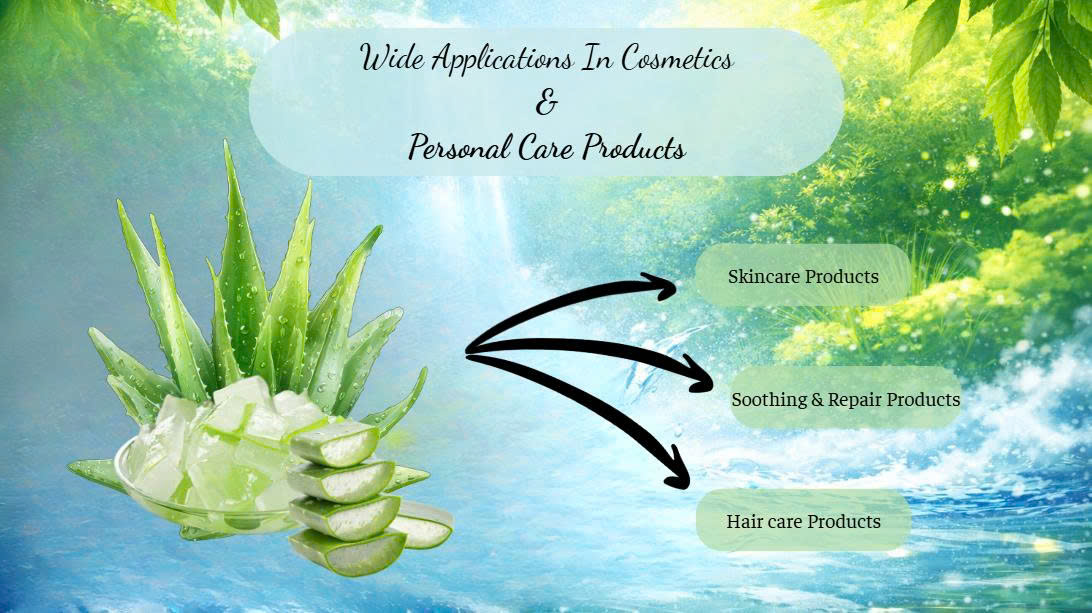
Wide Applications In Cosmetics And Personal Care Products
Thanks to its moisturizing, antioxidant, and soothing properties, aloe vera is widely used in many types of cosmetic and personal care products:
- Skincare products: Creams, serums, lotions, and sheet masks that help soften the skin, reduce dryness, and improve elasticity.
- Soothing and repair products: Cooling gels, after - sun creams, and products for sensitive skin that help reduce redness, irritation, and mild inflammation.
- Hair care products: Shampoos, conditioners, hair masks, and scalp treatments that help reduce itching, enhance shine, and promote stronger, healthier hair.
In formulations, aloe vera is often combined with vitamin E, hyaluronic acid, glycerin, or other antioxidants to enhance its effectiveness. Using standardized aloe vera extracts helps maintain stable levels of active compounds, reduces the risk of irritation, and ensures the quality of the final product.
Currently, aloe vera is available on the market in two main forms: aloe vera for food use and aloe vera for cosmetic use. Each type has different processing standards, purity levels, and intended purposes. Therefore, users should carefully consider and choose the appropriate type of aloe vera for their needs, avoiding confusion between the two categories to ensure safety and achieve the desired effectiveness.

Important notes when using Aloe Vera
Risk Of Irritation And Allergic Reactions
Aloe vera may cause irritation for sensitive skin or damaged skin. Some people may experience itching, redness, or a mild burning sensation when coming into direct contact with fresh aloe vera gel. Therefore, before applying it to a large area of skin, it is recommended to perform a patch test by applying a small amount to the wrist or behind the ear and observing the reaction for 24 hours.
Do Not Use Aloe Latex
The yellow sap located just beneath the aloe vera leaf skin contains aloin, a compound that can irritate the skin and mucous membranes and may negatively affect the digestive system if taken orally. When using fresh aloe vera, the peel should be completely removed, the yellow latex fully discarded, and the gel thoroughly rinsed several times with clean water before use.
Precautions When Applying Aloe Vera To The Skin
Aloe vera should not be applied to areas with cuts, severe inflammation, or open wounds, as it may increase the risk of irritation. In addition, aloe vera has cooling properties, so excessive or overly frequent use may disrupt the skin’s natural moisture balance.
Prioritize Processed Or Standardized Aloe Vera Extracts
To ensure safety and stability—especially in cosmetics and personal care products—it is advisable to use aloe vera gels or standardized aloe vera extracts that have been properly processed. At Nguyễn Bá Chemical, these extracts are quality-tested, demonstrating high stability and purity, making them suitable for moisturizing, soothing, and skin-repair formulations. Such products help reduce the risk of irritation while ensuring stable active ingredient levels that are easier to control than fresh aloe vera, delivering optimal benefits for both skin and hair.

Frequently asked questions
Is it good to use aloe vera every day?
Using aloe vera daily helps moisturize and soothe the skin while providing antioxidant benefits.
Does aloe vera make the skin more sensitive to sunlight?
Aloe vera does not increase sun sensitivity. However, it is recommended to use it in combination with sunscreen to keep the skin smooth while ensuring adequate protection.
Is aloe vera suitable for sensitive skin?
Aloe vera is generally safe for sensitive skin, but a patch test on a small area is recommended before applying it to larger areas to avoid irritation.
Can aloe vera be used for children?
Yes, it can be used, but only aloe vera gel that has been properly processed to remove the yellow latex should be used, and in small amounts to avoid allergic reactions. It is advisable to consult a doctor before use.
Is aloe vera effective for hair care?
Aloe vera helps keep the scalp moisturized, reduces itching, and supports stronger, healthier hair - especially when used as a hair mask for 20–30 minutes before shampooing.
Conclusion
Aloe vera is a nutrient-rich natural ingredient that offers many benefits for skin, hair, and overall health when used correctly. Understanding what aloe vera is, its components, benefits, and important precautions will help you maximize its value while minimizing potential risks during use.


