
What's the difference between skin-whitening and skin-brightening? Understanding it correctly for safe and effective skincare
24/01/2026

In cosmetics and skincare, skin-whitening and skin-brightening are often used interchangeably. Consumers tend to focus on the visible outcome - “brighter, fairer-looking skin” - rather than the underlying mechanisms. However, from the perspectives of dermatological science and cosmetic formulation, these are fundamentally different concepts, differing in objectives, depth of intervention, and potential risks when used improperly.
Misunderstanding the difference between skin whitening and skin brightening can lead to choosing the wrong products, having unrealistic expectations, or unnecessarily overusing strong active ingredients. This article by Nguyen Ba Chemical aims to clarify these differences from both scientific and practical viewpoints.
What is skin-whitening?
Skin-whitening is the process of using active ingredients that inhibit, regulate, or disrupt melanin production—the pigment responsible for skin color. The goal of skin whitening is to achieve a lighter complexion, reduce dark spots and hyperpigmentation, and visibly improve areas of increased pigmentation.
From a biological standpoint, skin whitening typically targets:
- Tyrosinase, the key enzyme involved in melanin synthesis
- The transport of melanin from melanocytes to the epidermis
- Or the accelerated removal of melanin-rich cells
Because it intervenes more deeply in the pigmentation process, skin-whitening products require strict control of dosage, frequency of use, and rigorous sun protection to ensure skin safety.
What is skin-brightening?
Skin brightening is the process of enhancing the skin’s radiance, freshness, and overall evenness without directly interfering with melanin production. In other words, as long as melanin remains beneath the skin and does not visibly appear on the surface, the skin can still be considered brightened.
Dull-looking skin often results from multiple factors such as the buildup of dead skin cells, prolonged dehydration, oxidative stress caused by environmental exposure, or unhealthy lifestyle habits. When the skin surface becomes rough, flaky, and uneven, its ability to reflect light is reduced, making the skin appear darker and less vibrant - even in the absence of increased pigmentation.
Therefore, skin brightening is primarily achieved by optimizing the natural desquamation cycle and reducing the accumulation of impurities on the skin’s surface. When the skin is adequately hydrated, smooth, and healthy, it reflects light more effectively, creating the appearance of clearer, brighter, and more radiant skin - without thinning the skin or disrupting pigment balance.

What is the difference between skin-whitening and skin-brightening?
Skin whitening is a deliberate biological intervention in the formation and expression of melanin pigments. Skin brightening, on the other hand, is a visual, holistic outcome influenced by multiple skin factors - not melanin alone. In other words, skin whitening is one possible pathway to brighter-looking skin, but skin brightening does not necessarily mean skin whitening.
|
Criteria |
Skin Whitening |
Skin Brightening |
|
Primary goal |
Reduce pigmentation, lighten skin tone |
Improve radiance and tone evenness |
|
Level of action |
Deep into the melanin cycle |
Mainly surface-level improvement |
|
Skin tone alteration |
Possible |
No |
|
Key contributing factors |
Pigment-inhibiting active ingredients |
Hydration, skin renewal, antioxidant protection |
If you are wondering about the difference between skin whitening and skin brightening, remember that skin whitening targets pigmentation, while skin-brightening focuses on improving overall skin quality.
Why does skin look dull or dark even without hyperpigmentation?
Not all darker-looking skin is caused by increased pigmentation. In fact, in many cases, proper skin brightening alone is sufficient to achieve visible improvement:
- Accumulation of dead skin cells reduces the skin's ability to reflect light.
- Dehydration makes the skin appear gray and fatigued.
- Oxidative stress caused bu pollution and UV exposure.
- Slower cell turnover associated with aging.
In these situations, skin-brightening achieved by improving hydration, surface smoothness, and the skin's natural repair capacity can be effective - without the need for aggressive skin-whitening interventions.
Common groups of active ingredients in skin-brightening and skin-whitening products
In cosmetics, skin-brightening and skin-whitening ingredients are classified based on their level of the interaction with skin physiology and the melanin cycle. Understanding each group helps clarify the difference between skin whitening and skin brightening, enabling safer and more appropriate product selection.
Skin brightening ingredients
This group focuses on improving skin radiance and tone evenness by supporting natural physiological processes without altering the skin’s biological color, making them suitable for long-term use.
- Vitamin C and stable derivatives (Ascorbyl Glucoside, 3-O-Ethyl Ascorbic Acid, etc.): Provide antioxidant protection, reduce dullness, and promote healthier, brighter-looking skin over time.
- Niacinamide: Helps limit the transfer of melanin to the skin surface while strengthening the skin barrier, reducing a gray, fatigued appearance.
- Low-concentration AHA/PHA: Support gentle exfoliation and cell renewal, improving surface smoothness and light reflection.
- Botanical extracts (licorice, mulberry, green tea, etc.): Offer mild brightening effects, soothing benefits, and enhanced formulation safety.
This group is well suited for daily skincare routines, carries low risk, and is generally appropriate even for sensitive skin.

Skin-whitening / Skin lightening ingredients
Unlike skin brightening, skin whitening ingredients directly target the melanin production process and are commonly used to treat visible hyperpigmentation and darkened areas.
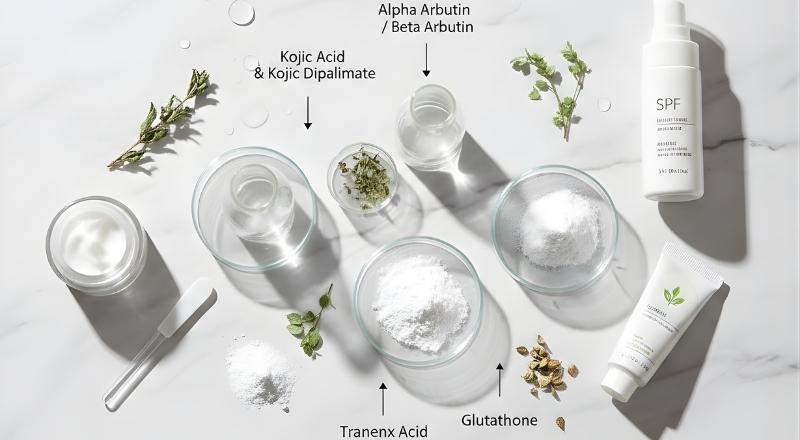
- Alpha Arbutin / Beta Arbutin: Inhibit the enzyme tyrosinase, helping to reduce new melanin synthesis.
- Kojic Acid & Kojic Dipalmitate: Help fade hyperpigmented areas; the Dipalmitate derivative is more stable and less irritating.
- Tranexamic Acid: Regulates hyperpigmentation and supports the improvement of inflammation-induced melasma.
- Glutathione (cosmetic-grade): Provides antioxidant protection and supports brighter, more even-looking skin.
Due to their deeper level of action, skin whitening ingredients must be used at appropriate concentrations and always combined with skin barrier repair and strict sun protection.
When should you choose skin-whitening, and when is skin-brightening enough?
Choosing between skin whitening and skin brightening should be based on the degree of hyperpigmentation, rather than the desire for “fast whitening.” Understanding the difference between skin whitening and skin brightening helps you select the right solution—one that is both effective and safe.
Skin brightening is sufficient when:
- The skin appears dull and lacks radiance but has no visible melasma or dark spots.
- Mild uneven skin tone caused by dehydration or dead skin cell buildup.
- Sensitive skin or skin in recovery after aesthetic treatments.
- The goal is healthy-looking, naturally radiant, and even-toned skin without changing the natural skin tone.
In these cases, skin brightening products help improve the skin’s surface condition and physiological balance. They are effective for daily skincare routines and carry low risk for long-term use.
Skin whitening should be considered when:
- The skin shows post-acne marks, darkening, brown spots, or clear hyperpigmentation.
- Skin brightening products no longer provide noticeable improvement.
- There is a need to treat localized darkened areas.
- The skin is healthy and able to tolerate deeper-acting active ingredients.
Skin whitening directly intervenes in the melanin formation process, delivering more visible results. However, it must be used in a controlled manner, at appropriate concentrations, and always combined with strict sun protection.
Conclusion
Understanding the true difference between skin whitening and skin brightening is the foundation of safe and effective skincare. Skin whitening is not inherently harmful, and skin brightening is not “weak” - what truly matters is choosing the right approach for your skin’s needs, using suitable active ingredients, and applying them correctly.
Beautiful skin is not only about being lighter in color, but about being healthy, even-toned, and stable in the long term.


